African Americans, Jews, Asians, and other minorities groups have historically been the target for prejudice feelings in America. When the first slave ship sailed to America in the early 17th century, racist feeling developed towards those aboard. When large numbers of Jews came to America at the turn of the 20th-century anti-semitism riots rose. As Asians flocked to America during the gold rush, nativism feelings drove Congress to implicate laws against them. These minorities groups have bared the brunt of discrimination in America. Aronson describes these events throughout his book and talks about how prejudice led to the immigration debate of the 1900s. The immigration debate has been at the forefront of American politics for decades and shadowed by feelings of prejudice.
Before the St. Louis, a German ship carrying 900 Jewish refugees left Europe, Fortune magazine published a poll presenting American thoughts on immigration.
"Eight out of every ten responders said they did not think the laws should be changed to allow in more European immigrants" (196).
Prejudice was a major influence on the minds of those responders. By building immigration barriers such as the Immigration Law of 1924, America ensured that its citizens were as close to Aryan as possible. Aronson comments on this historical example and explains how that led America down the "dark road" of racial thinking. In today's society, Americans can be seen doing the same thing that their ancestors did one-hundred years ago; building barriers to restrict immigration based on racial prejudice.
America today is far from the racially divided country that existed one-hundred years ago. In fact, according to Ana Gonzalez-Barrera and Philip Connor, co-authors of an article on immigration, a majority of U.S. citizens believe that immigrants strengthen our country. Based on the Spring 2018 Global Attitudes Survey, 59% of Americans believed that immigrants strengthened our country. However, while a majority of American citizens believe in the positive aspects of immigration, 35% of Americans believed that immigrants are a burden (Gonzalez and Connor). Prejudice is a major factor in the minds of those Americans who oppose immigration. They believe that immigrants are stealing our jobs, refusing to learn and speak English and sticking to their own neighborhoods to reinforce their culture (Aronson 197).
"They are, in a word, not American, and they never will be" (197)
Aronson uses immigration as a link between the past and the present to showcase how, while much has changed, the similarities between prejudice thoughts in today's society and those in the past. In 2016, Americans elected a new President. He is among that 35% who view immigrants as a burden to our country. In 2017, President Donald Trump signed an Executive Order that banned immigrants from seven predominantly Muslim countries from visiting the U.S. Officials argued that this ban was to protect Americans as a result of the increase in terrorist attacks. However, attacks such as 9/11, the Boston marathon bombing, and the Orlando nightclub shooting were carried out by people from countries, not on the banned list. Trump's travel ban can be viewed in a number of different ways, however, prejudice was most definitely a motive behind the ban. Moreover, six out of every ten Americans that responded to the poll taken by Politico agreed with the guidelines of the travel ban (Shepard). President Trump's travel ban is an example of current racial discrimination towards immigrants in our nation. Aronson describes how immigration at the turn of the 20th century reinforced prejudice among many Americans. Back then, Americans believed the newcomers were not racially similar to Anglo-Saxons and never would be. Although times have changed, similar feelings can be seen in modern society.
I choose the travel ban as an example of modern prejudice in America becaue of how similar it is to feelings our ancestors had in the past. While America has come a long way from the racially divided country that we once were, prejudice is still a current trend in our country. And will continue well into the future.
I choose the travel ban as an example of modern prejudice in America becaue of how similar it is to feelings our ancestors had in the past. While America has come a long way from the racially divided country that we once were, prejudice is still a current trend in our country. And will continue well into the future.
Prejudice in modern America can be seen in daily life as well. Throughout his book, Aronson gives historical evidence of the abuse that immigrants faced while trying to achieve a better life in our country. Jews, Italians, and the Irish were attacked, lynched, and degraded. Racially motivated hate crimes can still be seen throughout America today. For instance, in Pittsburgh last year, eleven people were killed when a gunman opened fire in a Synagogue. The shooter had repeatedly advertised anti-semitism feelings on social media before the attack (Robertson).
The image below is of the Synagogue in Pittsburgh.
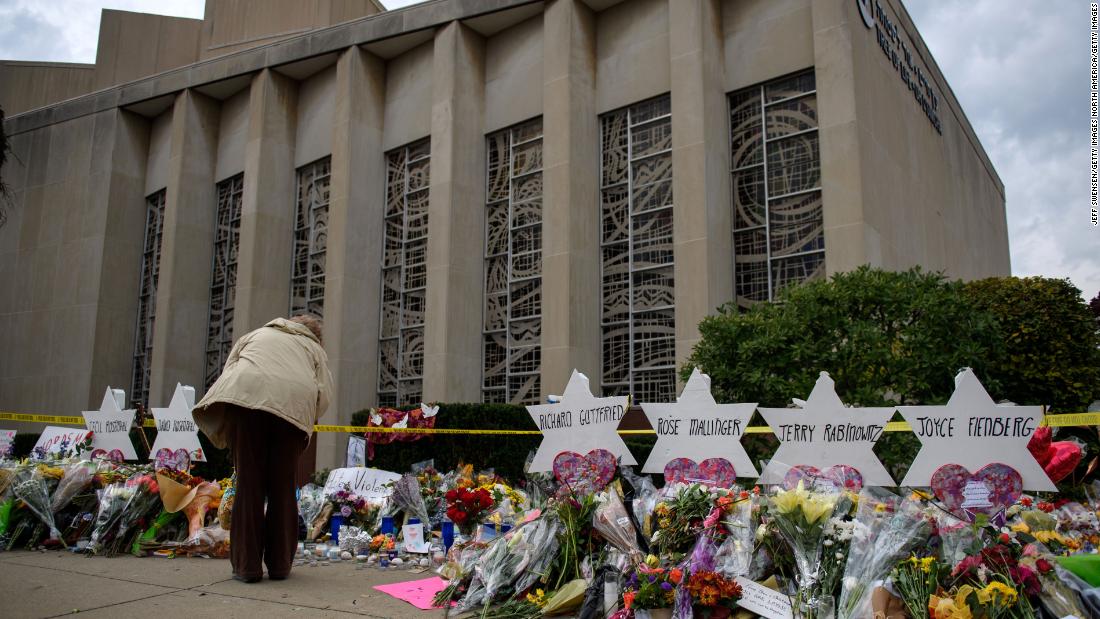
Jews were famously used as scapegoats for Germany's problems in the early 20th century. What many people don't know is that America fostered a similar attitude in regards to Jews. The 1924 Immigration Law was a triumph for the race theory and racist thinking in America. The St. Louis was barred from entering the U.S. as a result of the 1924 Immigration Law. Sentencing 900 Jews back to Germany and the mercy of the Nazis. American racists' sentenced those 900 Jews back to Germany. America's prejudice against Jews survived the dark ages of the 1900s and now lives on in a small percentage of Americans today as seen in the Pittsburg shooting.
When most people think of prejudice in America, they think of White Americans v African Americans. I choose to highlight other aspects of American prejudice. Aronson throughout his book does a great job of bringing to light other sides of American prejudice while still focusing on the history of race and racism. The discrimination towards immigration and minorities groups such as Jews is still present in modern America. As Aronson describes the world in which our ancestors used to live in, similarities can be seen in modern society. It's scary to realize that only decades ago, African Americans were segregated from White Americans. Learning about the history of race and prejudice has made me realize that our country still has a long ways to go before we are rid of these hateful feelings. That may never happen in my lifetime. There may never come a time within our society where prejudice feelings don't exist. However, understanding what racial discrimination is and where it came from, might educate people into changing their thoughts or actions.
Thanks for reading my blog! Leave a comment below on what you thought.
Citations:
Aronson, Marc. Race. Simon & Schuster Children's Publishing Division, 2007.
Gonzalez-Barrera, Ana, and Phillip Connor. "Around the World, More Say
Immigrants Are a Strength Than a Burden." Pew Research Center, 14 Mar.
2019, www.pewglobal.org/2019/03/14/
around-the-world-more-say-immigrants-are-a-strength-than-a-burden/.
Accessed 20 Mar. 2019.
Robertson, Campbell, et al. "11 Killed in Synagogue Massacre; Suspect Charged
With 29 Counts." New York Times, www.nytimes.com/2018/10/27/us/
active-shooter-pittsburgh-synagogue-shooting.html. Accessed 21 Mar. 2019.
Shepard, Steven. "Poll: Majority of Voters back Trump Travel Ban." Politico, 5
July 2017, www.politico.com/story/2017/07/05/
trump-travel-ban-poll-voters-240215. Accessed 21 Mar. 2019.
July 2017, www.politico.com/story/2017/07/05/
trump-travel-ban-poll-voters-240215. Accessed 21 Mar. 2019.

Hello Elizabeth,
ReplyDeleteExcellent third blog post! I find it very interesting that you used the travel ban as a comparison and connection to your book. History repeats itself, and here you connected the multiple times throughout history where prejudice was used in similar ways. I agree that it will take a considerably long time for racism and prejudice to end, but why do you think that is? Why do so many people in our country have the same negative opinions about minorities?
Hi Lily, thanks for reading my blog, I'm glad you found it interesting. Prejudice and racism have been around for centuries and has manifested over those years. Parents with hateful feelings towards a certain race will mostly likely transfer those feelings to their children. The cycle only ends when a child is brave enough to make up their own opinion of the world. In America, children sometimes only act or believe as their parents do. And since our ancestors were famous for mistreating minorites, people today have similar feelings towards those minority groups.
DeleteHi Elizabeth! Your blog was very interesting to read. Your extensive historical knowledge was evident in the first paragraph. I also liked how you compared the prejudice analyzed in Race with the immigration debate currently being fought in the United States. You integrate quotes from Race and information on the immigration debate very eloquently. My book Pushout also discusses prejudice. However, my book focuses primarily on the discrimination against black female students while your book appears to focus more on the overall concept of prejudice. I really enjoyed reading about the similarities between your book and the immigration debate!
ReplyDeleteThanks for reading my blog Ellie, I'm glad you liked it. My book focuses on the history of prejudice in Western culture. Marc Aronson, the author, uses historical evidence to build is case on the history of Western prejudice and racism. Your book, Pushout, sounds interesting to read. I wonder if there are any similarites in the evidence they use.
ReplyDeleteI love that you did not just focus on prejudice of African Americans and White Americans. I think that a lot of people do not realize there is prejudice beyond that. Especially in today's society where much of the "huzzah" is about black American and white Americans and not others even though they are present too.
ReplyDeleteElizabeth, you've linked the ideas of your book to current events well. I wonder if you find it interesting or concerning that the statistics about immigration in general don't quite match the statistics about people's approval of the travel ban. Why do you think there is a difference between those two ideas and their approval?
ReplyDelete