Wednesday, March 27, 2019

Free Choice


Hi readers, welcome back to my blog. I hope you enjoyed the last few posts. In today's post, I am going to be discussing how Marc Aronson connects the different acts of prejudice in the 20th century. I will mostly be focusing on chapters 15 through 17.
---------------------------------------------------------------------------------

The 20th century was a time of war, discrimination, and ultimately freedom for many people. But there was one constant link throughout those decades; prejudice. Marc Aronson does a great job of connecting and entwining the different acts of discrimination in the 1900s. He starts off chapter 15 by discussing the events that led to the Holocaust. He recounts the death march that the Herero perople, a tribe in the country of Namibia, were forced to march. This event led Dr. Eugen Fischer to study the children of legal marriages between men of European background and native women. His conclusion was devastating to Africans but insightful to a German prisoner named Adolf Hitler. By choosing to include this historical event, Aronson showcased how race played a key role in Hitler's actions towards Jews and African Americans. Throughout Race, Aronson uses historical evidence to enhances his argument without sounding like a history textbook. He recounts each historical event in a new light that makes you view it differently. This allows for readers like me to easily understand what he is trying to explain and how it relates to his argument. Learning how history is connected and the common threads throughout time is an important aspect of history. Aronson uses the Holocaust as an example of feelings of prejudice at that time. He later links the feelings of discrimination seen during the Holocaust with similar feelings Americans had. 
"Too many Americans believed that if the Jews were being persecuted, they must have deserved their fate... If blacks were being killed they must have provoked whites. If Jews were being killed, they must have brought it on themselves" (210). 

America eventually got involved in World War II but only after our country came under fire from Japan. In fact, President Franklin D. Roosevelt was aware of Hitler's death camps, but Americans pleaded not to go to war over Jews. Too many of our ancestors ignored the signs of harmful prejudice and instead acted on their own feelings of racism. African Americans were not the only target for white Americans during this time. Japanese Americans also faced the brunt of American resentment. Aronson showcases the similarities between Germany and America and how our thoughts and feelings were not all that different from the Nazis. Although we didn't go to the extreme that Adolf Hitler went to, our actions towards minorities were very similar. 
"While we see the image of the Nazi death camps, we are actually looking at a portrait of the world that believed in racial ranking sustained by blazing guns and discriminatory laws" (215). 
Japanese Americans heading to interment camps

 Jews in Nazi Germany heading to concentration camps

The similarities between the two images are uncanny. Sometimes, Americans forget that we forced thousands of Japanese Americans into internment camps. Some might say we did this to keep are country safe from future attacks. But why did all Japanese Americans come under suspicion when only a small percentage of Italians or German Americans were seen as suspicion? Because a majority of Americans were prejudice against all Asian people and others did not care enough. 

Aronson not only focuses on America and Europe in these chapters but also India. He highlights the connection between the American civil rights movement and that seen in India. Muhammad Gandhi is well known around the world. Many people wondered if his nonviolent approach to freedom and equality could work in the heavily segregated U.S. The struggles of Indians and African Americans were the same. They both wanted independence and equality. Martin Luther King Jr. and Gandhi were key figures in breaking down the wall of segregation and disrcimination in our world. Aronson uses these two events and figures to highlight how similar our world was in terms of segregation based on race. 

All of these events in the 20th century defined the future of our society. We no longer segregate based on race and feelings of prejudice have been reduced to a minority. While these historical events all occurred on different continents, they were all connected by the same feelings of prejudice. Aronson uses the connections seen in these events to reinforce his argument on race. The civil rights movements of India and America paved the way for future generations of activists. The Holocaust gave way to the unjust feelings of prejudice towards Jews. These events shaped our future while tearing down the walls of the past. 


I hoped you enjoyed this latest post!


Wednesday, March 20, 2019

Relevance

Hi readers, welcome back to my blog. In the last post, I talked about some of the rhetorical strategies that Marc Aronson uses in his book Race. In today's post, I am going to be linking Aronson's arguments to current events and examining their relevance.


African Americans, Jews, Asians, and other minorities groups have historically been the target for prejudice feelings in America. When the first slave ship sailed to America in the early 17th century, racist feeling developed towards those aboard. When large numbers of Jews came to America at the turn of the 20th-century anti-semitism riots rose. As Asians flocked to America during the gold rush, nativism feelings drove Congress to implicate laws against them. These minorities groups have bared the brunt of discrimination in America. Aronson describes these events throughout his book and talks about how prejudice led to the immigration debate of the 1900s. The immigration debate has been at the forefront of American politics for decades and shadowed by feelings of prejudice.

Before the St. Louis, a German ship carrying 900 Jewish refugees left Europe, Fortune magazine published a poll presenting American thoughts on immigration.
"Eight out of every ten responders said they did not think the laws should be changed to allow in more European immigrants" (196). 

Prejudice was a major influence on the minds of those responders. By building immigration barriers such as the Immigration Law of 1924, America ensured that its citizens were as close to Aryan as possible. Aronson comments on this historical example and explains how that led America down the "dark road" of racial thinking. In today's society, Americans can be seen doing the same thing that their ancestors did one-hundred years ago; building barriers to restrict immigration based on racial prejudice.

America today is far from the racially divided country that existed one-hundred years ago. In fact, according to Ana Gonzalez-Barrera and Philip Connor, co-authors of an article on immigration, a majority of U.S. citizens believe that immigrants strengthen our country. Based on the Spring 2018 Global Attitudes Survey, 59% of Americans believed that immigrants strengthened our country. However, while a majority of American citizens believe in the positive aspects of immigration, 35% of Americans believed that immigrants are a burden (Gonzalez and Connor). Prejudice is a major factor in the minds of those Americans who oppose immigration. They believe that immigrants are stealing our jobs, refusing to learn and speak English and sticking to their own neighborhoods to reinforce their culture (Aronson 197).
"They are, in a word, not American, and they never will be" (197)
Aronson uses immigration as a link between the past and the present to showcase how, while much has changed, the similarities between prejudice thoughts in today's society and those in the past. In 2016, Americans elected a new President. He is among that 35% who view immigrants as a burden to our country. In 2017, President Donald Trump signed an Executive Order that banned immigrants from seven predominantly Muslim countries from visiting the U.S. Officials argued that this ban was to protect Americans as a result of the increase in terrorist attacks. However, attacks such as 9/11, the Boston marathon bombing, and the Orlando nightclub shooting were carried out by people from countries, not on the banned list. Trump's travel ban can be viewed in a number of different ways, however, prejudice was most definitely a motive behind the ban. Moreover, six out of every ten Americans that responded to the poll taken by Politico agreed with the guidelines of the travel ban (Shepard). President Trump's travel ban is an example of current racial discrimination towards immigrants in our nation. Aronson describes how immigration at the turn of the 20th century reinforced prejudice among many Americans. Back then, Americans believed the newcomers were not racially similar to Anglo-Saxons and never would be. Although times have changed, similar feelings can be seen in modern society.

I choose the travel ban as an example of modern prejudice in America becaue of how similar it is to feelings our ancestors had in the past. While America has come a long way from the racially divided country that we once were, prejudice is still a current trend in our country. And will continue well into the future.

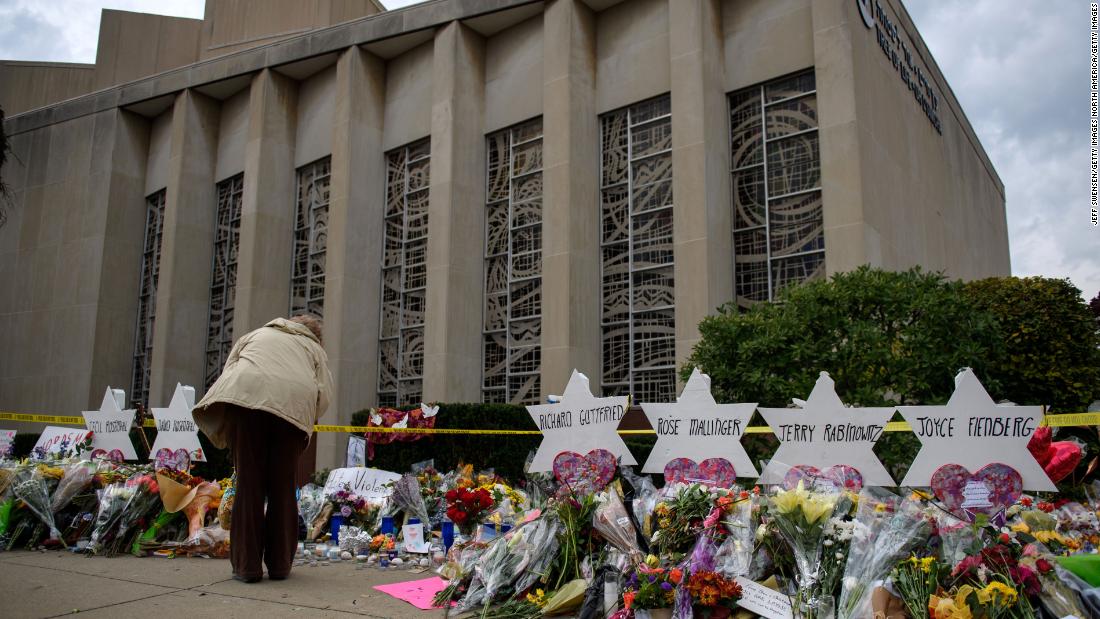
Prejudice in modern America can be seen in daily life as well. Throughout his book, Aronson gives historical evidence of the abuse that immigrants faced while trying to achieve a better life in our country. Jews, Italians, and the Irish were attacked, lynched, and degraded. Racially motivated hate crimes can still be seen throughout America today. For instance, in Pittsburgh last year, eleven people were killed when a gunman opened fire in a Synagogue. The shooter had repeatedly advertised anti-semitism feelings on social media before the attack (Robertson). 


The image below is of the Synagogue in Pittsburgh.


Image result for pittsburgh synagogue

Jews were famously used as scapegoats for Germany's problems in the early 20th century. What many people don't know is that America fostered a similar attitude in regards to Jews. The 1924 Immigration Law was a triumph for the race theory and racist thinking in America. The St. Louis was barred from entering the U.S. as a result of the 1924 Immigration Law. Sentencing 900 Jews back to Germany and the mercy of the Nazis. American racists' sentenced those 900 Jews back to Germany. America's prejudice against Jews survived the dark ages of the 1900s and now lives on in a small percentage of Americans today as seen in the Pittsburg shooting. 

When most people think of prejudice in America, they think of White Americans v African Americans. I choose to highlight other aspects of American prejudice. Aronson throughout his book does a great job of bringing to light other sides of American prejudice while still focusing on the history of race and racism. The discrimination towards immigration and minorities groups such as Jews is still present in modern America. As Aronson describes the world in which our ancestors used to live in, similarities can be seen in modern society. It's scary to realize that only decades ago, African Americans were segregated from White Americans. Learning about the history of race and prejudice has made me realize that our country still has a long ways to go before we are rid of these hateful feelings. That may never happen in my lifetime. There may never come a time within our society where prejudice feelings don't exist. However, understanding what racial discrimination is and where it came from, might educate people into changing their thoughts or actions.

Thanks for reading my blog! Leave a comment below on what you thought. 


Citations: 

Aronson, Marc. Race. Simon & Schuster Children's Publishing Division, 2007.

Gonzalez-Barrera, Ana, and Phillip Connor. "Around the World, More Say
     Immigrants Are a Strength Than a Burden." Pew Research Center, 14 Mar.
     2019, www.pewglobal.org/2019/03/14/
     around-the-world-more-say-immigrants-are-a-strength-than-a-burden/.
     Accessed 20 Mar. 2019.


Robertson, Campbell, et al. "11 Killed in Synagogue Massacre; Suspect Charged
     With 29 Counts." New York Times, www.nytimes.com/2018/10/27/us/
     active-shooter-pittsburgh-synagogue-shooting.html. Accessed 21 Mar. 2019.


Shepard, Steven. "Poll: Majority of Voters back Trump Travel Ban." Politico, 5
     July 2017, www.politico.com/story/2017/07/05/
     trump-travel-ban-poll-voters-240215. Accessed 21 Mar. 2019.


Thursday, March 14, 2019

Rhetorical Analysis of Race


Hi readers, welcome back to my blog. In this post, I will be focusing on the rhetorical strategies that Marc Aronson uses throughout his book Race.

Almost every American can say that they have experienced prejudiced or, at the least, heard of someone who has. Prejudice and race can be seen in every aspect of American society, from clothing brands to medical treatment. Because race and prejudice are so integrated with society, talking about them can be challenging as many people have strong opinions. However, Marc Aronson does a great job focusing on the facts while still incorporating some emotions. He utilizes both logos and pathos and constantly blends the two together. One way he does this is by including modern stories and quotes at the start of his chapters that connect to his argument. Aronson also displays images throughout his book to support his arguments while appealing to pathos and logos.

Aronson begins chapter seven of Race, with quotes from Antonio de Montesinos and Francisco de Vitoria. Both of whom lived during the 16th century.
"I am the voice of Christ saying to you that you are all in a state of mortal sin for your cruelty and oppression in your treatment of this innocent people. Are these Indians not human beings?"                                                                                                                                                                                                               —Antonio de Montesinos (1511)
"Although these barbarians are not entirely lacking in judgement, they are little different from the feebleminded... They are not even better than beasts and wild animals...  Their stupidity is much greater than that of the children or feebleminded of other peoples."                                                                                               —Francisco de Vitoria (1540s) (93) 
Antonio de Montesinos was a Spanish missionary on the island of Hispaniola who believed in fair treatment of natives. He argued that the natives should not be subjected to the harsh treatment at the hands of European explorers because they too were human beings. Francisco de Vitoria was a Spanish philosopher who fought against everything that Antonio Montesinos believed in. Vitoria viewed the natives in the New World as "barbarians" and no better off than beasts or wild animals. Aronson chooses these two quotes to show the different sides of the debate that many Europeans disputed over in the 16th century. These two quotes bring forth two concepts that Aronson argues in this chapter. The first was that not all Europeans were cruel and prejudiced towards natives. This was a major step toward understanding. And the second argument Aronson makes is that while some Europeans accepted the natives, the majority of Europeans viewed them as "savages". This was a large step toward modern prejudice in America. By including these two primary examples in his book, Aronson appeals to the logos of his readers. This allows for the readers to see real-world evidence of how prejudice transferred from Europe to America and where modern prejudice in America started. Moreover, these quotes represent the basic ideology of many Americans during the 19th century and most of the 20th century. Only the natives, in this case, were African Americans. Americans were following in their European ancestors' footsteps as they walked down a long road of prejudice.

When most people think of the history of prejudice in America, they think of the typical white versus black stereotype. While the color of one's skin was still a major component of modern Western prejudice, Aronson explains how religious prosecution played a key role as well. Throughout Part Three and Four of Race, Aronson repeatedly talks about religious prejudice and how that links to racism in America. He links and compares these two topics to show his readers the importance that religion had in the creation of racism in America. By comparing these two topics, Aronson appeals to the pathos of his readers. For instance, Aronson examines the relationship between Protestant Englishmen and Catholic Irishmen and how their relationship forced many Irish to flee to the shores of America. The English viewed the Irish in the same way that the Spaniards viewed the natives in the 1500s.
"The bitter hatreds between English Protestant farmers and Irish Catholic herders were so extreme that the two neighbors appeared to be two completely different peoples. As SepĂșlveda and his allies insisted that the American natives were not human, the English were coming to the conclusion about the Irish" (108). 

He encompasses the hatred between English Protestants and Irish Catholic by comparing that to what SepĂșlveda and the Spanish felt towards natives. This appeals to the pathos of his readers because they understand the hatred that these groups had towards each other and what led to prejudice. He uses our knowledge from early chapters to connect with his new argument on why English prejudice towards the Irish lead to Western prejudice. Because of the intense prejudice at home (and famine), millions of Irish immigrants fled to America along with millions of other Europeans immigrants. These new Irish immigrants desperately wanted to fit in with American society. African Americans and the Irish were often competing for the same low-paying jobs and housing. Which made it all the more important for the Irish to distinguish themselves from blacks. Aronson makes the argument that because Irish immigrants wanted to prove themselves to Americans, they added to the already present feelings of racism in America. Aronson again appeals to the logos of his audience by incorporating evidence to back up his argument. This can be seen in the numerous historical facts that Aronson uses and the images that he includes throughout his book.

"The Irish mob attacking blacks in the New York Draft Riots (above)" (150). 

Aronson periodically incorporates images like the one above to appeal to his readers' pathos and logos. This image invokes strong emotions from readers because they can see how poorly blacks were treated and how strong prejudice was. Moreover, viewing something versus reading about it invokes stronger emotions because the reader can focus on detail instead of trying to create an image within their mind. Furthermore, this picture appeals to the logos of his readers by showcasing real historical evidence. I thought it was interesting how he chooses to include some many images. It certainly helped me understand some of the more complex ideas that Aronson was talking about. 

Lastly, I would like to talk about Aronson's style and structure. He starts off a chapter with a modern example or quote that encompasses the idea of that chapter. He builds upon the ideas seen in the modern example and shows how it relates to his argument in that chapter. This can be seen when Aronson talks about Jane Elliot and her eye color experiment. He connects this to how discrimination and power can separate people into categories never seen before. Which is something that masters and slaves took up in the 1600s around the world. He uses these connections to link modern prejudice with the history of prejudice. This allows for the readers to see the connection from the past to the present. Aronson has a unique writing style. He focuses on history and facts while using his personal emotion within the topics that he talks about. This can be seen in the first couple of chapters of Race, when Aronson gives a personal recount of his life. He uses that story to build upon the main message of his book; the history of prejudice. 


Thank you for reading my blog, I hoped you enjoyed this post. 


Wednesday, March 6, 2019

Marc Aronson's Argument

Prejudice is a hard topic to discuss. Globally, every civilization has experience some aspect of prejudice in their society. From slavery in America to the persecution of Jews in Europe, prejudice has been seen in every corner of the earth. In my blog, I will document my readings of the book Race, written by Marc Aronson, as he uncovers the history of prejudice in Western Society. Please enjoy!


The definition of race can be stated as the following, 
"A competition between runners, horses, vehicles, etc. to see which is the fastest in covering a set course." 1
While this is an accurate definition of the word, race in this context means something else. In his first chapter, Aronson defines the word race as the following, 
"A way of explaining human difference and organizing people into categories. It rests on four assumption—what [he] call[s] 'pillars' (2)"

Throughout the first section of the book, Aronson repeatedly references his four pillars: physical differences, physical body features, inherited traits, and level of brain power and moral refinement. He uses these four ideas as the basis for his book. By examining how each of these pillars grew, developed, interconnected, and came to be true, Aronson uncovers the history of racism and prejudiced in the Western world. And why, Americans of every background, experience prejudiced to the extend of which it is today. 


To uncover racism in the Western world, Aronson travels back in time to when race and prejudice were first formed. He starts off the book by talking about slaves in ancient civilization. Long before white Americans enslaved Africans in the 17th century, slavery was seen around the world. Africans enslaved other Africans, Asians enslaved other Asians, and so on. He mentions ancient slavery because it made a huge contribution to Western civilization. Out of the conditions that slaves endured came the idea of monotheism, if the Bible is to be believed. This is one of the most basic ideas of Western civilization. Unlike ancient Egypt, Western society believed in only one god. The belief in only one God led down a road of new prejudice, war, and enslavement based on God's will.


 In his next couple of chapters, Aronson talks about Greeks v. Jews, the Roman Empire, and the birth of Christianity. He dives deeply into each of these topics and pulls out information that helps build an understanding of the formation of prejudice. Prejudice first started as a matter of social ranking. Greeks enslaved other Greeks because they were of a different social ranking. The rich enslaved the poor. White Europeans later enslaved African Americans because they were thought of as savages. They were seen as uncivilized and thought to be on the bottom of the social latter.

Aronson then goes on to talk about the role religion played in the creation of modern prejudice. The differences between Christianity, Islam, and Judaisms led to hatred and ultimately prejudice between the different religions. Spain, up until the 1400s was a place of religious tolerance. Jews, Muslims, and Christians all lived together in one nation. It wasn't until the Christian kingdoms of Spain merged together that religious tolerance died. When Spain became a formal Christian nation, laws were put in place that checked the powers of other religions. For instance, only pure-bred Christians could hold high offices. By enacting these laws, the Spanish took a large step toward the idea of "race" by linking blood-line with faith. And in doing so, took the first steps down a long road of prejudice. 


Aronson wraps up Part Two of his book by describing Christopher Columbus's contributions to prejudice in Western culture. When Columbus sailed from Spain to the New World he brought with him the question on whether monstrous men (natives) were humans or not? Could they be saved with the faith of Christianity or were they doomed to be destroyed? Columbus's voyage revealed new ways of thinking that lead to the belief that,
"Religion was not a choice but an inheritance. (89)"

As more and more Europeans sailed across the ocean, they began to experience the unchangeable differences between groups of people. They saw different skin colors, hair colors, and body types that could be ranked. This is where the concept of the race began to form.


Marc Aronson wrote this book as a way to understand prejudice in Western society and why, Americans of every background, experience such high levels of prejudice. In the first two sections of Race, Aronson uncovers the history of prejudice. He argues that the creation of Western prejudice was formed over a long period of time through religion and ancient social ranking. I do agree with his argument that prejudice developed over a long period of time. However, I do not have enough background knowledge on the history of prejudice to determine if Aronson is right or not. Aronson's extensive research on this topic and clear factual evidence makes me want to agree with his argument. 


1.Definition of race. English Oxford Living Dictonaries, en.oxforddictionaries.com/
 definition/race. Accessed 5 Mar. 2019.